WorkSafeBC AI Knowledge Base

Overview
Every year, WorkSafeBC organizes a Hackathon that invites individuals to submit innovative ideas aimed at adding value for either its internal team or external stakeholders, including employers and workers across British Columbia. This event is a major draw, attracting over 500 participants annually who compete with their ideas and solutions.
Initiative: In May 2023, I submitted the idea of the “WorkSafeBC AI Helper,” an innovative solution designed to improve efficiency and service quality for both staff and external customers. My proposal stood out amidst the competition, securing third place and winning the necessary funding for its implementation.
Role
Product Manager / Idea Champion
Platform
Web App
Deliverables
Research, product development, design, data analysis.
Execution
Problem
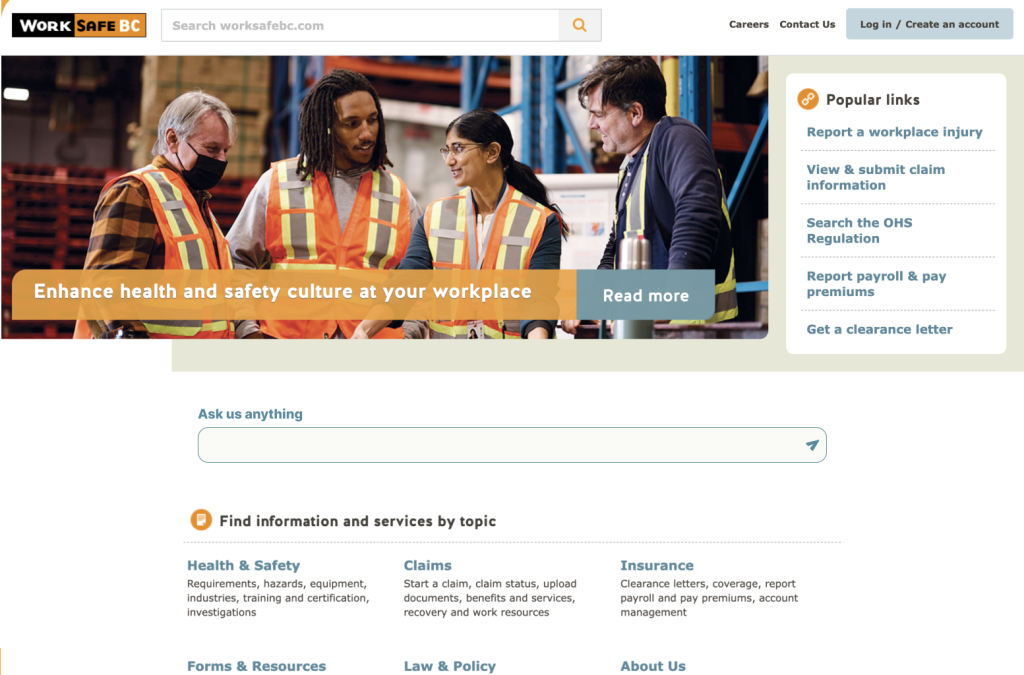
WorkSafeBC dedicates significant effort and resources to produce comprehensive documentation for the public. This documentation includes a wide array of information such as helpful tips, essential contacts, critical dates, and timelines, among other valuable insights.
However, accessing this information has proven challenging for many. Feedback from our surveys and various communication channels has consistently highlighted difficulties in finding specific information. A significant number of our customers resort to using Google for their queries, bypassing the WorkSafeBC search function and our meticulously organized information architecture. Unfortunately, even this method does not always yield the desired results.
This gap in easily accessible information leads to customer frustration and an increase in unnecessary calls to our Call Centers. Many of these inquiries involve basic questions that could be resolved online, thus consuming time and resources that could be better allocated to cases requiring personal interaction and the human touch.
Idea
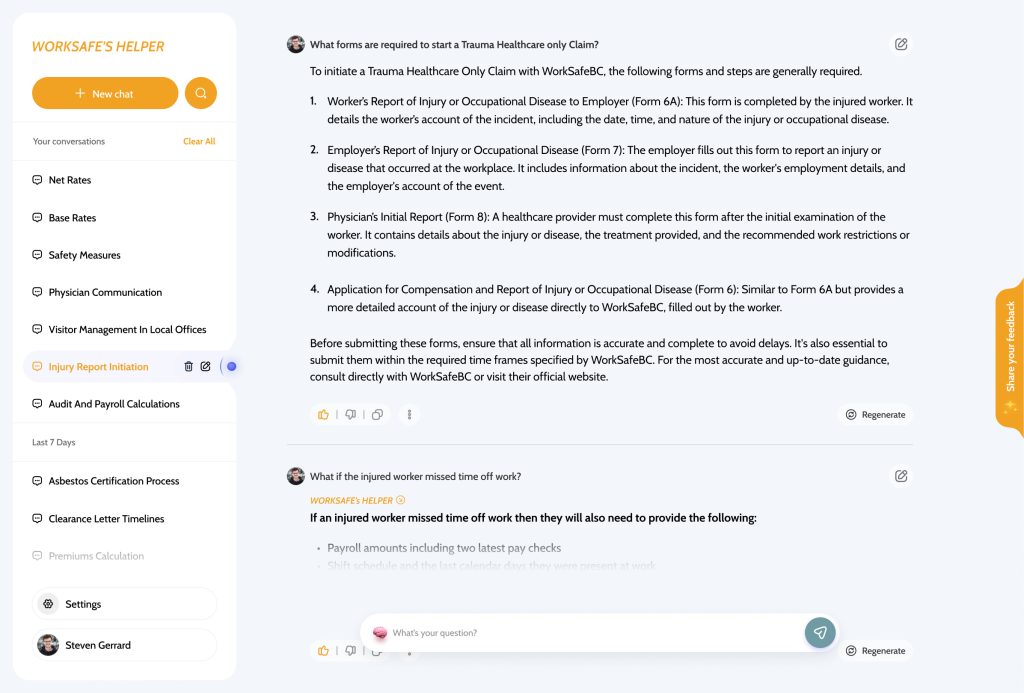
The core of my solution was to leverage the OpenAI API, specifically the GPT-3.5 language model, to revolutionize how customers accessed WorkSafeBC’s wealth of public information and documentation. The strategy involved integrating our existing data with a vector database, which acted like a smart index for the vast amount of text we had. This wasn’t just about searching for keywords; it was about understanding the context and meaning behind user queries.
By feeding our documents into this vector database, we created a system where the language model could quickly identify and retrieve the most relevant information in response to natural language queries. This meant our customers no longer had to navigate through the traditional, often cumbersome search experience. Instead, they could ask questions in plain language and receive precise, context-aware answers.
This approach not only made the search process more intuitive but also significantly enhanced the accessibility of information, reducing customer frustration and the volume of basic informational inquiries to our Call Centers. It was about making information not just available but easily discoverable and understandable.
Recruitment
Leading this project meant I had to pull together the right team, which was challenging. Since each staff member could only join one team for the Hackathon, competition for the best talent was tough. My goal was to find and motivate people from business, engineering, and data departments to see the value and get excited about our idea.
It was all about finding people who were not just skilled but also as passionate about the project as I was. Despite the tight competition, I managed to recruit 4 software engineers and 1 data scientist. Together, we have built a working prototype in 2 days of the Hackaton and won the third place, securing the funding.
Outcomes
Winning third place was a significant achievement, but I recognized early on that launching this tool publicly came with risks. Specifically, the danger of the AI providing incorrect information to an injured worker was a concern we couldn’t overlook. The potential consequences of such errors necessitated a cautious approach.
To address this, I shifted our strategy. Rather than releasing the AI Helper as a public-facing tool, I proposed using it internally as a resource for our customer service representatives. This pivot made sense because our team already relied on a variety of knowledge sources, including our public site, internal SharePoint, LAN folders, and other documents. This scattered approach often led to friction and delays in retrieving information.
By positioning the MVP as an internal tool, the AI Helper could streamline the information retrieval process for our staff, reducing response times and improving service quality. This internal application also allowed for a controlled environment to monitor and refine the AI’s performance.
This strategic shift garnered leadership approval. As of April 2024, we’re launching a pilot program for beta users within our team. This step marks a significant milestone in our journey towards enhancing efficiency and service through innovative technology.